Change

Afriland Towers Disaster: How Quickly We Have Moved On

It is quite common in Nigeria to hear people talk about politicians waiting out the storm whenever a bad event occurs, as they are sure that Nigerians cannot seem to stand on business for a long time. And so, over and over again, we have disgraceful and even deadly events occur, and just a few days later, everyone moves on, like it never mattered. But to progress as a nation, we need to be able to learn and enforce lessons to forestall a reoccurrence.

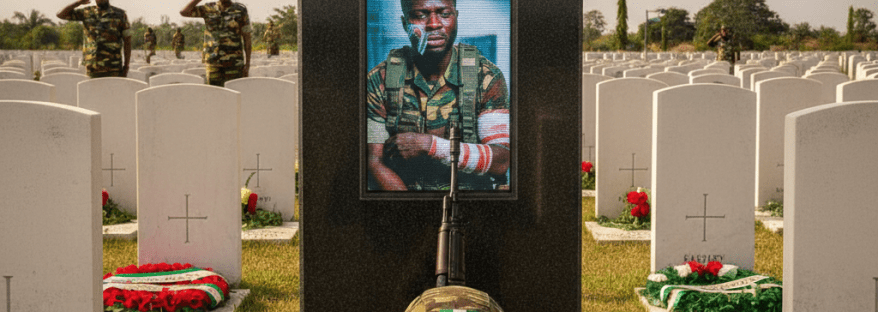
On 16 September 2025, a commercial building in the bustling Lagos caught fire and by the time the smoke cleared, at least 10 persons from different organisations working in the building had been deprived of their lives. However, apart from some public eulogy by people who knew the departed ones, nothing else seems to have happened. One month later, the government (Federal / State / Local) does not seem to have done anything noteworthy with regards to addressing the diabolical wastage of human lives, investigating the causes and implementing new systems to avoid a repeat. Similarly, the affected organisations, at least publicly, have only focused on eulogising their slain employees, with everyone happy to put this unfortunate incident behind them. Afterall, to the average person, why should they bother with forestalling a future incident when the future is not in their hands?

This entrenched failure to learn appears to be a feature of the Nigerian life. However, if we had any interest in becoming better, here are some questions that should be asked.

  1. What led to the fire?
  2. What fire prevention or mitigation systems existed in the building? If available, did they function as designed?
  3. What emergency evacuation systems existed in the building? If available, did they function as designed?
  4. When was the last time a fire drill was conducted in the building? Were all residents aware of what to do in a fire incident?
  5. What emergency response systems existed in the building? If available, did they function as designed?
  6. Could anyone have been saved if emergency medical services were promptly available?
  7. How long did it take to inform the fire service of the active fire incident and how long did it take for the first fire truck to arrive at the building? What improvements could be made to the response time?
  8. Upon arrival at the building, were there any limitations faced by the fire fighters that impacted their efficiency or effectiveness in taking out the fire? If yes, what could be done to optimise their operations?
  9. What lapses in the building led to the unfortunate outcome? Which other buildings in Lagos have similar lapses?
  10. If the same incident were to occur today in a similar building, would the outcome be different?

The problem is not that a fire occurred or that people died, but that we seem fine with making no big deal of avoidable loss of lives and properties. Today, the aviation, nuclear and petroleum industries are some of the “safest”, but this safety record came at the cost of lives that were lost in the past and triggered changes to safety practices. This is how we know a society that is interested in becoming better—it commits to continuous improvement, not keeping silent and waiting for the public to move on. The government officials responsible for building inspections, fire safety and related matters, the owners of the Afriland Towers, and the management teams of the affected companies should note that they could have been the ones inside that building at the time of the fire. Maybe if some of them had died, the response could have been different, but we do not have to wait until we are directly affected. These persons owe a duty, either directly or vicariously, to ensure that we do not have another incident like this. And everyday Nigerians and the media also need to bring it up from time to time. Let this not be like the incident of a young doctor whose life was wickedly terminated by a dysfunctional lift and years later the lift is yet to be repaired. At some point we need to take responsibility as a country for the lives of our people. Our current foolishness is unsustainable.

Image Credit: channelstv.com

Randoms, Travelling

Dangote Did Not Cause Deadly Trailer Accidents

“Aye, fight! But not your neighbor. Fight rather all the things that cause you and your neighbor to fight.” ~ Mikhail Naimy

While the title of this article may trigger some persons to ask if I have Dangote cement or petrol in my pockets, if I can be given just some time to explain, maybe my integrity would be unquestioned. Yes, it is true that trailers either belonging to or affiliated to the Dangote Group have wreaked havoc on the Nigerian public, including the recent killing of Ruth Otabor, but while it is easy to request for Uncle Dangote’s head on a spike, the accidents are not of his making. Rather, they are simply a symptom of a more complex problem to be solved.

Continue reading “Dangote Did Not Cause Deadly Trailer Accidents”
Change, Randoms

Of Productivity and National Attitudes to Work

The past week or two saw a little debate on “Nigerian Twitter” about a claim that Nigerians are unwilling to work, effectively saying Nigerians are lazy. While the proponents of the claim had the initial field day espousing their view, the opposing team came out strongly in the second half with valid rebuttals around inadequate remuneration and unstructured workplaces. As usual with many of these debates, the truth is neither here nor there.

Continue reading “Of Productivity and National Attitudes to Work”
Change, Politics

A Demonic Oppression Called Quota System

In my previous article, I talked about hope on the horizon regarding the rebirth of Nigeria and I got a fair tackle from some persons who have become desperately pessimistic about the prospects of Nigeria. But whereas I remain adamant that Nigeria is changing, I acknowledge that the change is seemingly too slow for many reliably disappointed Nigerians and that one of the chains unwilling to allow Nigeria to attain its full degrees of freedom is the famous quota system, which has become a principal demon fashioned against Nigeria.

Continue reading “A Demonic Oppression Called Quota System”
Change, Inspiration

When Nigeria Happens to You

“May Nigeria not happen to you.”

In recent years, this phrase has become quite commonly used among many Nigerians. To the onlooker, it would seem as if the name “Nigeria” has become synonymous, or worse, eponymous, with “evil”. At the root of the usage lies a deep sense of disappointment, regret, and sometimes bitterness at misfortunes that some Nigerians see as entirely attributable to their being Nigerian or their being in Nigeria. But maybe the tide is changing, howbeit, slowly.

Continue reading “When Nigeria Happens to You”
Change, Politics

To Tax Nigerians with All Our Strength

If Uncle Jeremiah had been alive in this era, he may have had second thoughts about naming his second book as “Lamentations”. As an empathetic person, after seeing the torrent of complaints by Nigerians, maybe his own book would have been the Book of Less Worrisome Jewish Lamentations. But poor jokes asides, Nigerian social media spaces and even offline conversations these days tend to highlight a common pain point around taxes, just like the irreverent sapa, attempting to strangulate people.

Continue reading “To Tax Nigerians with All Our Strength”
Change, Energy

Cutting the Head of the Cobra Effect


In economics, the concept of “Perverse Incentive” commonly refers to a situation where an incentive leads to detrimental outcomes for the enablers of such incentive. The most popular example comes from British Colonial India where an attempt to eliminate cobras in Delhi by paying for each killed cobra led to people farming cobras. Due to self-interest, the socially or morally optimal outcome will never occur as humans would rig the system to perpetuate the incentive. This is the rabbit hole that Nigeria needs to escape from.

Continue reading “Cutting the Head of the Cobra Effect”
Change, Energy

A Different Kind of Petrol Subsidy for Nigeria

Recently, in a think-tank of sorts ensconced within a WhatsApp group, the issue of petrol subsidies came into play. Clearly, in Nigeria today, the issue of petrol subsidies, whether they are needed or not, whether they exist or not, is a serious discourse set within the context of a struggling economy. When someone suggested addressing the subsidy issue by digitising purchases tied to NIN, I had an eureka moment with an idea that could be seen as silly and unimplementable or provide a solution to a serious socioeconomic challenge.

Continue reading “A Different Kind of Petrol Subsidy for Nigeria”
Change

An Anthem Better Than a Silver Bullet

Very few persons will ever have the privilege of witnessing surreal ingenuity as magnificent as the silver bullet to national malformation. Jodi Picoult, the American wannabe pessimist once claimed that “…There are no silver bullets in life, there’s just the long, messy climb out of the pit you’ve dug yourself.” But even Auntie Jodi would be enthralled to live in the same era as the wise men in two chambers who have discovered Nigeria’s short walk to freedom.

Continue reading “An Anthem Better Than a Silver Bullet”