“I never wonder to see men wicked, but I often wonder to see them not ashamed.”
Jonathan Swift
Thanks to our naughty African brethren, very likely the Ghanaians or the South Africans, who have chosen “vawulence” every day on social media, the term “Abegistan” began to be rudely applied to Nigeria to attest to a supposed culture of begging at all opportunity. But while, we tried to maintain our steeze, stay demure, and defend the glory of the fatherland, the American IShowSpeed visited Nigeria and streamed institutionalised begging for the world to see.
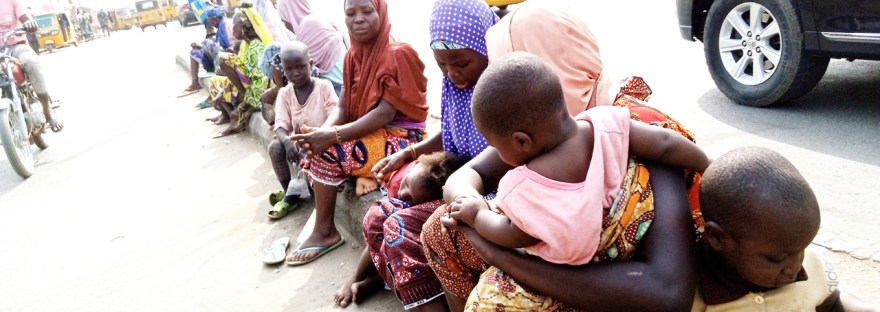
Oh, the shame! The ridicule of seeing your compatriots on Elon Gates’ internet begging a random American for cash on their own soil can push the uninitiated to say in Royal English that “shame tie me wrapper”. But for many Nigerians, sadly, there was nothing shameful about begging for money. How else were the beggars supposed to earn a living? What’s the big deal if there are countless complaints and videos of Nigerians begging in every environment possible, from the busy streets of Oshodi to the bourgeois malls in Wuse to the polished terminals of our airports? It is simply honest Nigerians earning a living—by begging!
One unfortunate aspect of begging in Nigeria is how it has been institutionalised and woven into the culture like a protected heritage. Over a decade ago, I was shocked to see a news report about beggars in some locations in Nigeria having territorial boundaries and leaders who coordinate the league of beggars. Just as some unscrupulous elements in a country like the UK would live on welfare benefits and train their children to exploit the same system instead of looking towards a lifetime of real work to create value for the society, we have street beggars in Nigeria who, with their multiple wives and children, groom these unfortunate children to learn the ropes, start begging at a tender age and transition into fulltime professional begging. And just as wicked politicians need an impoverished citizenry to exploit during elections, there are Nigerians who defend the rights of beggars to loiter the streets just so these better placed persons can sustain the feeling of righteousness, of being able to “help the needy”.
But begging is not only for the downtrodden. The hoodlums on the streets do theirs with a sprinkling of implied or even overt violence, just like gun-trotting police officers either beg nicely or simply stretch their hands and dare drivers to leave those hands hanging empty. Then we have the English-speaking, pseudo polished ones chasing “giveaways” across social media, pasting their bank account details at every smell of naira notes. However, all of these are small-scale begging. At another level, begging cum extortion occurs where say a movie is being shot, or an event is ongoing, or a video intended for social media is being shot, or a building is being constructed, or even a septic tank (soakaway pit) is being emptied by a truck, and hoodlums or even government-sanctioned extortionists approach and demand money as a requirement for whatever activity is being carried out. Industrial level begging occurs in white collar offices where personnel would expect “something for the boys” before a file can be processed or a boss notified that a guest is waiting. At this level, just as it occurs in lower levels, begging readily swaps roles with straight-cut extortion. This is Abegistan in all its full glory.
Am I okay with all of these? Certainement pas! While I recognise that widespread poverty influences some aspects of the begging activities we see, it is also clear that begging for many persons is simply cultural, not necessarily because they are broke or unable to survive otherwise. And for some, it is a simple case of “brilliant” calculation that they can get more cash by begging that by having “normal” jobs. The sad thing is having a cultural mindset that seems to enable the practice of begging at all levels. How do you fight something that seems entrenched in the minds of many Nigerians?
Firstly, we need to accept that it is neither normal nor sustainable to build a society on the pillar of begging. This acceptance is a critical first step to taming the menace of institutionalised begging. Then we need to actively engineer an economy where adequate opportunities exist to earn an honest living that a normal person would not think of relying on begging others to make ends meet. Then we need to criminalise begging on the streets. This sounds wicked but if a man with three wives and fourteen children knows that if anyone from his family is seen begging on the streets, they would be transported to work compulsorily on government-owned or allied farms in their home states and paid as farm support workers, he might rethink seeing begging as a long-term career option. Similarly, if a hoodlum knows that harassing anyone on the streets for money would lead to his relocation to a farm for mandatory paid labour, his career choice might be influenced in a different direction. White collar begging can be handled using the instrument of anti-corruption enforcement. However, in all these corrective pathways, the enforcers must be people with correct brains, not those who would turn anti-begging enforcement into their own money-making machine.
Seeing Nigeria being called Abegistan on social media could be traumatic, especially when you consider the implication that all Nigerians are seen as beggars, just as some persons traffic drugs and the Nigerian passport gets routinely flagged at international airports by countries who heuristically treat anyone with a Nigerian passport as a potential drug trafficker. We obviously need to fix this mess, not because of the jealous Ghanaians or South Africans, but because it does not make sense to be seen as beggars. Nigeria is not Abegistan!
Image Credit: Jesutomi Akomolafe / The Guardian