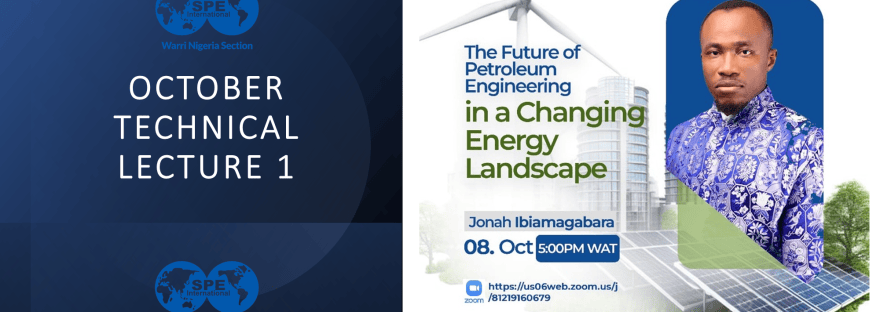
When the Society of Petroleum Engineers, Warri Section, reached out to ask that I anchor a technical session on the topic, I took some time to ponder on the petroleum industry amid the uncertainties in today’s world. The industry has had disruption as part of its DNA, so whatever challenges it faces today are just another iteration of catalysts that force adaptation.
Continue reading “The Future of Petroleum Engineering in a Changing Energy Landscape”Category: Change
Looking Towards a Digitally Transformed and Energy Secure Nigeria
The question is why we are unable to muster what we have towards solving a problem that others have already shown us how to solve
Nigeria boasts massive energy resources cutting across crude oil and gas, solar energy, a bit of wind energy, and lots of the enabling elements such as iron ore and lithium that are now the livewire of industrialisation. In addition to these resources, Nigeria also boasts an impressive array of human capital straddling the engineering domain, yet Africa’s most populous, well-endowed nation, continues to suffer self-inflicted energy poverty.
Continue reading “Looking Towards a Digitally Transformed and Energy Secure Nigeria”ECOWAS Biometric Card: Retrogression, Deceit, or Plain Regional Dysfunction?
Since its inception, the Economic Community of West African States (ECOWAS) has championed the promise of deepening integration across the subregion to stimulate shared economic prosperity. Yet, decades into this experiment, regional integration remains frustratingly subpar—even if, by some small mercy, it fares slightly better than what obtains across the wider African continent. Officially, ECOWAS citizens enjoy the right to move visa-free across member states. In practice, however, one is forced to wonder if a borderless West Africa is merely a paper-thin ideal that the regional apparatus lacks the capacity to operationalize.
Continue reading “ECOWAS Biometric Card: Retrogression, Deceit, or Plain Regional Dysfunction?”Constraining Nigeria’s Industrial Future One Solar Panel at a Time
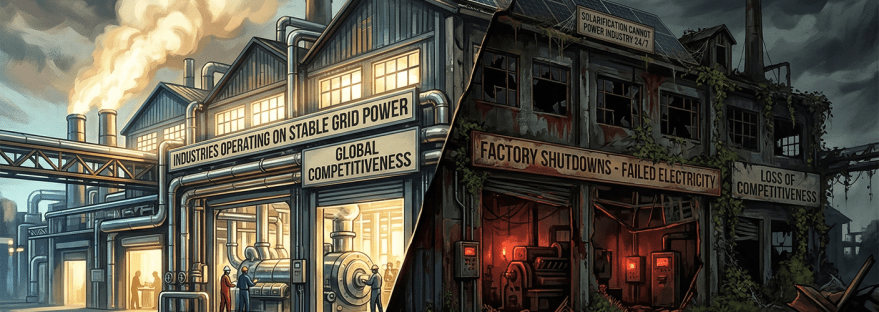
How do you solve a problem that appears to be a little more complicated than rocket science? More than ten years after a cerebral Nigerian politician asserted that fixing Nigeria’s electricity supply conundrum “is not rocket science”, with some claims that he said a serious government could fix entrenched sectoral challenges within six months, there is arguably less electricity supply in “most” parts of Nigeria compared to a decade ago, and combined with rising costs, more persons are turning to solar power systems aka “inverter”.
Continue reading “Constraining Nigeria’s Industrial Future One Solar Panel at a Time”Of Governments and Financial Insatiability
It is commonly said that when an individual’s income increases, expenditures, if unchecked, would rise to meet the income, and necessitate further increase in income. While individuals have their ability to singlehandedly increase their incomes constrained by factors associated with the value delivery or productivity (perceived or real) in the marketplace whether as business owners or employees, governments are largely unencumbered by value or productivity considerations thanks to taxation.
Continue reading “Of Governments and Financial Insatiability”Afriland Towers Disaster: How Quickly We Have Moved On
It is quite common in Nigeria to hear people talk about politicians waiting out the storm whenever a bad event occurs, as they are sure that Nigerians cannot seem to stand on business for a long time. And so, over and over again, we have disgraceful and even deadly events occur, and just a few days later, everyone moves on, like it never mattered. But to progress as a nation, we need to be able to learn and enforce lessons to forestall a reoccurrence.
Continue reading “Afriland Towers Disaster: How Quickly We Have Moved On”Of Productivity and National Attitudes to Work
The past week or two saw a little debate on “Nigerian Twitter” about a claim that Nigerians are unwilling to work, effectively saying Nigerians are lazy. While the proponents of the claim had the initial field day espousing their view, the opposing team came out strongly in the second half with valid rebuttals around inadequate remuneration and unstructured workplaces. As usual with many of these debates, the truth is neither here nor there.
Continue reading “Of Productivity and National Attitudes to Work”A Demonic Oppression Called Quota System
In my previous article, I talked about hope on the horizon regarding the rebirth of Nigeria and I got a fair tackle from some persons who have become desperately pessimistic about the prospects of Nigeria. But whereas I remain adamant that Nigeria is changing, I acknowledge that the change is seemingly too slow for many reliably disappointed Nigerians and that one of the chains unwilling to allow Nigeria to attain its full degrees of freedom is the famous quota system, which has become a principal demon fashioned against Nigeria.
Continue reading “A Demonic Oppression Called Quota System”When Nigeria Happens to You
“May Nigeria not happen to you.”
In recent years, this phrase has become quite commonly used among many Nigerians. To the onlooker, it would seem as if the name “Nigeria” has become synonymous, or worse, eponymous, with “evil”. At the root of the usage lies a deep sense of disappointment, regret, and sometimes bitterness at misfortunes that some Nigerians see as entirely attributable to their being Nigerian or their being in Nigeria. But maybe the tide is changing, howbeit, slowly.
Continue reading “When Nigeria Happens to You”To Tax Nigerians with All Our Strength
If Uncle Jeremiah had been alive in this era, he may have had second thoughts about naming his second book as “Lamentations”. As an empathetic person, after seeing the torrent of complaints by Nigerians, maybe his own book would have been the Book of Less Worrisome Jewish Lamentations. But poor jokes asides, Nigerian social media spaces and even offline conversations these days tend to highlight a common pain point around taxes, just like the irreverent sapa, attempting to strangulate people.
Continue reading “To Tax Nigerians with All Our Strength”