Politics

Of Biafra, IPOB and Diabolic Strategies

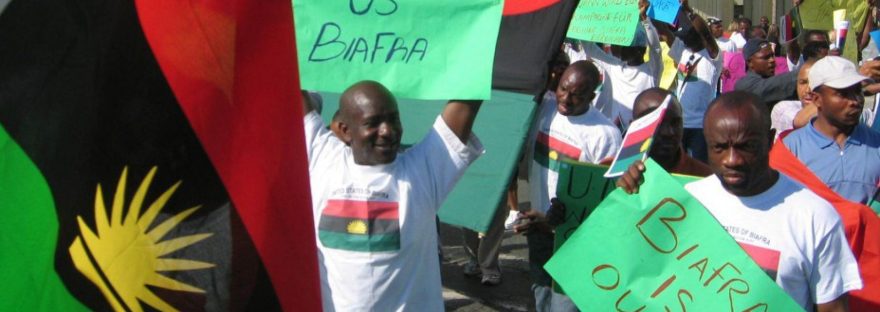
So, Jonah, what do you think about IPOB?” This question, posed by an Igbo friend, would lead to a discussion between myself, the questioner, and a second Igbo friend; none of us fans of IPOB, and has also triggered this article. In case you are uninitiated, IPOB stands for the Indigenous People of Biafra, an organisation that seeks the formation of a new country called Biafra, and that appears to assume that someone like me, a non-Igbo from Rivers State, is automatically and unquestionably a citizen of Biafra.

Continue reading “Of Biafra, IPOB and Diabolic Strategies”
Change, Politics

Saving Nigeria Through Resource Control

Of all the myriad issues that have plagued Nigeria since its independence in 1960, resource control is one of the biggest, arguably resent-laced issues that straddles everything from equity, political control, to plain expropriation. Nigeria is currently in the process of another piecemeal constitutional amendment, with resource control being a recurring demand from the oil producing region, while an affiliated demand seems to have contributed to delaying the Petroleum Industry Bill. Is there a way to redefine the pie and allow all stakeholders to go home happy?

Continue reading “Saving Nigeria Through Resource Control”
Politics

Of a Food Blockade and Common Sense

“Babe, the market is scanty. Many fresh food sellers did not show up, and those around said food supplies are limited.” My wife’s voice on the phone finally made it personal. I had been following reports online of a “food blockade” on Southern Nigeria by Northern Nigeria, but now it had gone beyond mere news reports to something that would make our family spend more on food this month. Fortunately, we could stomach the higher cost of limited supplies at the market, but I wondered about the infamous pyrrhic victory and a seemingly maniacal drive by some persons to cut off their nose to spite their face.

Continue reading “Of a Food Blockade and Common Sense”
Person being beat up
Change, Politics

Frustration 601: When Brethren Fight

They say the grasses suffer when two elephants fight, but I wonder what happens to the elephants when the grasses fight over their lowly state. While you may cringe at the impossible metaphor of grasses fighting themselves, I have chosen it to highlight a paradoxical happening in society where one group of oppressed persons would take out their frustrations on another group of oppressed persons, while the oppressors pick out pieces of meat stuck in their fortunate teeth from a continuous meal of oppression.

Continue reading “Frustration 601: When Brethren Fight”
Change, Politics

A Litany of Bad Choices

If you had to choose between eating your cake and having it, what would you choose, and how would you make this choice? Would your choice be logical, emotional, a blend of the two, or a clean random pick? Whichever you choose, you would be aware that every choice has a consequence one way or the other. However, looking at the national development angle in Nigeria, it looks like we make weird choices and later wonder why things took a wrong turn. Whereas there are several factors behind our woes in Nigeria, one common denominator for our dysfunctional state is a litany of imprudent choices.

Continue reading “A Litany of Bad Choices”
Politics

America: A Tale of Two Conspiracists

One of the most popular retellings of Jesus’s ministry is his encounter with the adulterous woman and a band of sanctimonious accusers. In that event, although wrapped in a cloak of love, Jesus rightly showed his disdain for sin, but made it clear that the accusers lacked moral standing against the accused. In today’s article, let me stand in for Jesus, with the penitent woman represented (poorly) by the unrepentant Trump, while the righteous accusers be played by the political Left.

Continue reading “America: A Tale of Two Conspiracists”
Change, Politics

INEC and a Chance for Real Elections

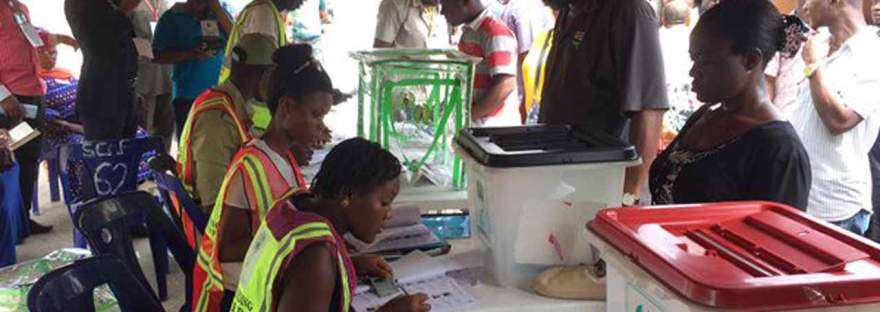
Debbi Stabenow, an American politician, is quoted to have stated that “Democracy is about voting and it’s about a majority vote. And it’s time that we started exercising the Democratic process.” If we accept that democracy is a governance system that is truly reflective of the will of the citizenry, then we must begin to wonder why it seems that many elections in Nigeria reflect the will of a certain subset of society rather than the majority of the populace. Today, we discuss a potential approach for the electoral umpire to remedy this malady. However, we would begin with a discussion of some reasons driving low participation of Nigerians in the democratic process.

Continue reading “INEC and a Chance for Real Elections”
Lekki Toll Gate Massacre
Change, Politics

#EndSARS: A Nation in Need of Healing

“It has been said, ‘time heals all wounds.’ I do not agree. The wounds remain. In time, the mind, protecting its sanity, covers them with scar tissue and the pain lessens. But it is never gone”

Rose Fitzgerald Kennedy

On 1 October 2020, Nigeria marked 60 years of independence from British colonial rule. Unknown to merry makers and observers, barely a week later, a sequence of events would lead to young Nigerians demanding independence from a faux democratic elite symbolised by the infamous police unit, the Special Anti- Robbery Squad (SARS). Within two weeks, events have evolved from peaceful protests led by an educated base to unmatched rioting and looting led by the uneducated thugs we love to fear.

Continue reading “#EndSARS: A Nation in Need of Healing”
Change, Politics

Nigeria at 60: A Thousand Words in a Graph

On 1 October 1960, the landmass internationally known as Nigeria was granted independence by its erstwhile “colonial masters”, setting the stage for a journey that has now spanned sixty years. There are already a tonne of viewpoints and articles evaluating the sexagenarian with in-depth analysis, but I have chosen a different route. Instead of making a judgement call, I would present data and let you decide how Nigeria fared over six decades. After all, they say “a [graph] is worth a thousand words”.

Continue reading “Nigeria at 60: A Thousand Words in a Graph”
Change, Politics

Of A General, His Colonel, and Justice

The famed novelist, Salman Rushdie once opined that “Two things form the bedrock of any open society – freedom of expression and rule of law. If you don’t have those things, you don’t have a free country.” If these two are essential ingredients, then it may be debatable whether Nigeria, “Africa’s largest democracy”, is a “free country”; “free” in the sense that citizens are assured of the government and society’s commitment to the rule of law. Talking about commitment to the rule of law, Colonel Sambo Dasuki (Retd.) was just released after four years of confinement, with serious questions about the place of the rule of law in Nigeria.

Continue reading “Of A General, His Colonel, and Justice”