
As this blog marks ten years, I checked my files and found this article that was written within the first week of starting the blog, but somehow did not get posted because I felt it was incomplete.
“We pray that God will change this country”
“Our politicians have spoiled this country”
“We need a leader that will turn this country around”
I can bet that every Nigerian has heard the statements above, and that at least sixty percent of Nigeria’s teeming populace have made the statements (plus many other similar ones) themselves. These statements demonstrate one innate attribute of many Nigerians—we absolve ourselves of any responsibilities in fixing problems, and wait for someone else to fix our problems for us.
Is the time not right for us to have an epiphany and realize that years of waiting for others to fix our problems has seen us slump deeper into the problem? It is one thing to fall into a deep pit, with no means of climbing out, and then waiting for a good Samaritan to bring a rescue rope, but it is another thing to keep waiting in that pit if we realize that it has crevices built into its wall. A little courage to climb up via the crevices, one step at a time, is preferable to enormous cowardice in waiting for a knight in shining armour.
The knight in shining armour is never coming to Nigeria. I’m not even sure he’s got our GPS coordinates. We’ve waited so long for God, other nations and outstanding Nigerians to provide a magic pill for our problems. God has already given us all the wisdom we need, developed nations have given us nation-building examples to follow and the enabling global environment, and outstanding Nigerians are ineffective in the midst of mass nonchalance.
Nigeria cannot change in one day. The change we seek is a gradual process that would happen one day at a time. One person cannot change Nigeria. Positive change would require all Nigerians (or at least a majority of our citizens) contributing their quota to transform the country. One person can inspire the change, and we all need to be that person.
When was the last time you saw an overzealous (or rather unpatriotic) law enforcement officer extorting money from a driver or brutalizing another Nigerian (whether guilty or not)? What did you do? Passengers heckle drivers who refuse to give money to policemen. As far as we are concerned, it is better to stand by the status quo than to have our time wasted by corrupt policemen.
Imagine a scenario where a bus driver is ordered to park by the roadside because he refuses to “roger” the policemen. The passengers then join their driver in arguing with the policemen about the legality of their action. The policemen don’t pay them any attention, and flag down the next vehicle, where the scenario repeats itself. At the same time, passengers start taking pictures and discussing their plight on social media. The policemen cannot afford to keep over 20 vehicles parked by the roadside indefinitely and would surely give up with time. If this scenario repeats itself nationwide, every day for more than a week, even the most corrupt (or should I say stupid) policeman would rethink the sustainability of the extortion business model.
The actions described above are also applicable to brutalization by security agents, especially when they occur in the open. I have witnessed a scene where a police van sounding its siren (technically illegal in some, if not all states) tried to force its way through traffic. Everyone budged except for one brave driver. For being defiant, his car window received the butt of a gun, he got beaten by the officers of the law; all this in full public glare. I was “bravely scared” and tried to use my phone hidden inside my shirt to capture the scene; the results were blurry at best. I wondered what would happen if everyone there brought out their mobile phones to take pictures and shoot videos of the illegality. Would the policemen shoot every single person there? In Nigeria, we all say we want a change but we also seem to be scared of dying for it. If policemen knew that illegal actions in public will be broadcasted for all to see, won’t there be a change of heart. If we can stop brutalization in public, backstage brutalization in police stations and barracks would wind down with time.
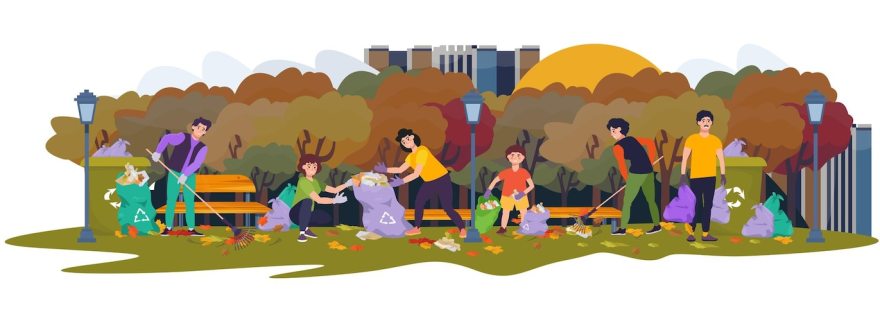
The average road in Nigeria is an assembly plant for refuse—dropped not by unfriendly aliens, but by Nigeria’s own citizens. I’ve heard a proverb that says if everyone cleaned the front of his house, the entire street would be clean. Imagine a country where every citizen made it a duty to help keep the environment clean; the healthcare agencies would have less work to do. A healthy workforce has a greater potential for higher productivity than an unhealthy one.
Many Nigerians are unhappy at the “big men” who use bank officials to jump queues. But queue jumping is a habit that many of us take as “normal”. Obafemi Awolowo University is one school that has proved that Nigerians can be rewired to act gently. Queues are part of the school culture. Whether it is due to students’ fear of getting expelled if involved in fights is irrelevant. The important thing is that everyone knows that no matter your body size, you should not attempt to bully your way to the front of the queue. Even when a “smart” guy jumps a queue and the immediate victim is scared, someone else would step up to reiterate the queuing policy. Is it not possible to reproduce this cultural change all over Nigeria? If people can queue to join BRT buses in Lagos, why can’t the same people queue to join Danfo buses? All it would take is a conscious effort each day to join a queue and tell others around there to do the same. Queuing would greatly reduce some of the violence witnessed every day in Nigeria. I don’t have any statistics but I can bet that the fighting rate in OAU is far less than that of most Nigerian universities.
Developed nations have citizens who have a stake in the country and abide by available laws. How many Nigerians actually have a stake in the country’s revenue base? I believe that one of the factors boosting corruption is the fact that we see Nigeria’s main revenue source, oil and gas production, as a national cake, belonging to no one and to be consumed by any person with any form of access to it. The same is true for most countries having a main export product.
Nigerians don’t really complain because we don’t feel the pinch. If you knew that the money being stolen was gotten from the taxes you paid as part of your civic responsibilities, I expect your level of anger to far exceed that of the individual who doesn’t pay taxes and so believes the money being stolen is not his money. Many Nigerians view corruption as a case of politicians stealing money. Corruption transcends that view. Knowing what to do, and not doing it, brings your integrity into question. If that isn’t corruption, then we definitely need a new definition.
We see the “big politicians” as embodiments of corruption. That’s a self-righteous view designed to keep us from looking at our own actions. The employee who is paid to do a job, but still wants to be tipped before doing it, is as corrupt as the person siphoning billions of naira. The employee who resumes work by 8:50 and signs in as 7:50 shouldn’t complain that Mr. ABC ate the money meant for a public project. The parent who encourages his/her kids to collect two packs at an event, when other kids haven’t even gotten one, is as corrupt as the man who receives legislative pay but never shows up during debates in the house.
The list goes on and on. There’s a lot of things we do every day that come under the purview of corruption, but that we don’t see because we keep looking at the spec in our neighbour’s eye, forgetting to remove the big log in our own eye. Nigeria cannot change that way. Waiting for a group of politicians to suddenly transform into saints, is like waiting for an ocean to dry up—it’s never going to happen. The political sphere is a microcosm of the Nigerian polity. The changes would have to come from you and I. Waiting for “them” is meaningless because we are “them”.
Tackling corruption would take a conscious effort by every Nigerian to do the right thing every day. I was taught a mantra in secondary school that says, “Do the right thing, at the right time, in the right place, in the right uniform”. I didn’t take it serious, but now I realise that it was an attempt to get the students to consciously decide to be right at all times, and that is a decision that we all need to make.
Image Credit: freepik.com
PS. This article was written on 08 October 2014.

 Jilomes